


Introduction: Why Starting Habits Feels So Hard

Most people do not struggle with motivation. They struggle with starting.
You decide to exercise more, read daily, or study consistently. The intention is clear. The goal is important. Yet somehow the habit never begins. Days pass, motivation fades, and the plan quietly disappears.
This is the hidden problem behind procrastination. Many productivity systems focus on big goals instead of small actions. They tell you to read for an hour, work out for 45 minutes, or completely overhaul your routine overnight. When the starting point feels overwhelming, the brain naturally resists.
This is where the 2 minute rule changes the game.
Popularized by James Clear in Atomic Habits, the 2 minute habit rule suggests that any new habit should take less than two minutes to start. Instead of forcing yourself into a full routine, you begin with a tiny action that feels almost effortless.
These small actions act as gateway habits. A simple step like opening a book, putting on running shoes, or sitting down to meditate may only take a moment, but it creates momentum that makes the larger habit easier to continue.
Understanding what is the 2 minute rule and how it works can completely change the way you approach two minute rule habit building. Instead of relying on motivation, you build systems that make starting simple.
Table of Contents
Section 1: What Is the 2 Minute Habit Rule?
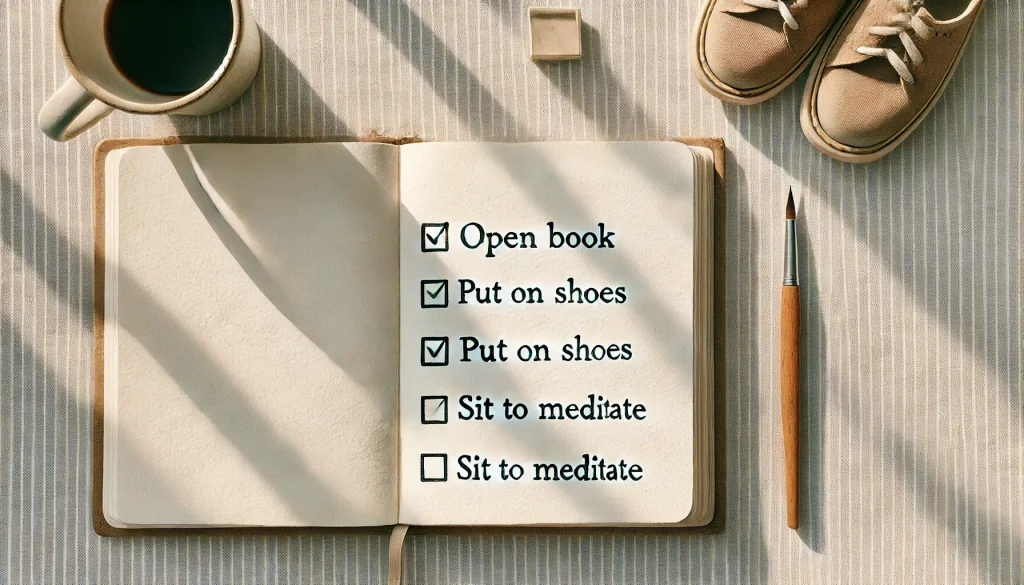
The 2 minute rule is a habit building strategy that focuses on making new habits extremely easy to start. The idea is simple. When you begin a new habit, reduce it to an action that takes less than two minutes to complete.
This approach removes the pressure of performing a full routine and replaces it with a tiny starting behavior.
The core idea behind the 2 minute habit rule is simple.
• New habits should take less than two minutes to begin
• The focus is on starting the habit, not completing the full task
• Small actions help reduce resistance and procrastination
For example, instead of setting a goal to read for 30 minutes every night, the habit begins with reading a single page. Instead of committing to a full workout, the habit might simply be putting on your running shoes.
These actions may seem small, but they serve an important purpose. They create a consistent starting point that makes the habit easier to repeat.
This is the key idea behind two minute rule habit building. When the barrier to starting is low, the brain is far less likely to resist the behavior.
In many cases, once the first two minutes are complete, people naturally continue. The hardest step of any habit is rarely the effort itself. The hardest step is simply beginning.
Section 2: The Core Principle Behind the 2 Minute Habit Rule

The real power of the 2 minute rule comes from what are often called gateway habits. These are extremely small actions that act as the entry point to a larger behavior.
A gateway habit lowers the barrier to starting. Instead of committing to the full habit, you commit only to the first tiny step. Once that step is completed, continuing the habit becomes much easier.
This is the foundation of the 2 minute habit rule. The goal is not to complete the entire task immediately. The goal is simply to start.
This also explains why most people fail at building habits. Many people try to start with big commitments that feel overwhelming from the beginning. When the starting point feels difficult, the brain naturally resists the behavior.
Small actions naturally lead to larger behaviors because starting creates momentum. When the brain feels no resistance to the first step, it becomes far easier to continue the activity.
Some common examples of gateway habits include
• Read one page instead of committing to reading for 30 minutes
• Put on running shoes instead of planning to run three miles
• Open your notes instead of promising a full study session
Each of these actions takes less than two minutes. But once the habit begins, people often continue far beyond that small starting point.
This concept connects directly to one of the key principles from Atomic Habits. James Clear describes the third law of behavior change as make habits easy.
When a habit feels easy to begin, the brain stops resisting it. Over time these tiny starting actions become automatic routines, turning simple behaviors into consistent habits.
This is the core idea behind two minute rule habit building. Instead of forcing discipline through effort, you design habits that are almost impossible not to start.
Section 3: Where the 2 Minute Rule Comes From

To fully understand what is the 2 minute rule, it helps to look at where the idea originally came from.
The concept was influenced by productivity expert David Allen, the creator of the well known productivity system Getting Things Done. In his system, Allen introduced a simple guideline.
“If a task takes less than two minutes, do it immediately.”
The purpose of this rule was to prevent small tasks from piling up. Instead of writing them down or postponing them, quick actions are completed right away.
James Clear later adapted this idea while writing Atomic Habits. Instead of applying the rule to task management, he applied it to habit formation.
This created the modern version known as the 2 minute habit rule.
There is an important difference between the two approaches.
Task productivity version
• Complete small tasks immediately to reduce mental clutter
Habit building version
• Start habits with a tiny action that takes less than two minutes
In the habit version, the focus is not on finishing a task. The focus is on creating a consistent starting ritual that eventually grows into a full routine.
By turning habits into simple starting actions, the 2 minute rule makes behavior change easier and far more sustainable over time.
Section 4: Real Life Examples of the 2 Minute Habit Rule

The power of the 2 minute rule becomes clear when you see how it works in everyday life. Instead of forcing yourself into a full routine immediately, the habit begins with a tiny action that feels easy to start.
These small starting behaviors remove resistance and create a natural path toward bigger habits.
One well known example comes from a reader who struggled with weight loss. Instead of committing to intense workouts, he made a simple rule for himself. His only goal was to go to the gym for five minutes. At first, the habit was simply showing up and doing a short session. Over time, those five minute visits gradually turned into longer workouts. Eventually, this consistent habit helped him lose more than 100 pounds.
Other examples of the 2 minute habit rule show how small actions can trigger much larger routines.
• Meditation habit begins by sitting quietly with eyes closed for a moment
• A yoga routine begins by unrolling the yoga mat
• A study session begins by opening notes or textbooks
Each action takes only a few seconds. But once the behavior begins, people often continue naturally.
This is the foundation of two minute rule habit building. The goal is not to complete the full habit immediately. The goal is to create a starting ritual that happens consistently.
Over time, these tiny actions expand. Sitting quietly turns into a full meditation session. Opening notes turns into focused studying. Unrolling the mat leads to a full yoga practice.
This same approach can also help people stop forgetting tasks. When actions are reduced to small, repeatable steps, they are easier to remember and integrate into daily routines.
Small beginnings often grow into powerful routines.
Section 5: Why the 2 Minute Habit Rule Works

Understanding what is the 2 minute rule becomes easier when you look at the psychology behind it. The strategy works because it aligns with how human behavior naturally develops.
One key reason is momentum. Starting a task creates a sense of movement. Once you begin an activity, it becomes easier to continue rather than stop.
Another factor is the concept of inertia. Just like objects in motion tend to stay in motion, people who begin an activity often continue beyond the original two minutes.
The 2 minute habit rule also fits perfectly with the habit loop structure commonly used in behavioral psychology.
The habit loop follows a simple pattern
• Cue
• Craving
• Response
• Reward
By repeating small actions daily, the brain starts linking cues with specific behaviors. Over time the routine becomes automatic.
Another powerful element of two minute rule habit building is identity development. Every time you complete a small habit, you reinforce the belief that you are the type of person who performs that behavior.
For example
• Reading one page reinforces the identity of someone who reads daily
•Going to the gym briefly reinforces the identity of someone who exercises.
• Opening study notes reinforces the identity of someone who studies consistently
These small wins build confidence and strengthen behavioral patterns.
When repeated consistently, tiny actions reshape routines. What begins as a two minute habit can eventually transform into a long term lifestyle behavior.
For many people, this approach can also feel like a practical way to restart their life. Instead of trying to change everything at once, progress begins with one small action repeated every day. Over time, these simple habits build momentum and gradually create meaningful change.
Section 6: How to Apply the 2 Minute Habit Rule

The 2 minute rule is simple in theory, but it works best when you apply it intentionally. The goal is to make a habit so easy to start that it feels almost impossible to avoid.
Here is a practical way to use it in daily life.
1. Choose a habit you want to build
Start with one behavior you want to make consistent.
This could be
• reading daily
• exercising
• meditating
• studying
• journaling
Pick a habit that matters to you, but avoid making it too broad or ambitious at the start.
2. Reduce it to a two minute starting action
This is the most important step in the 2 minute habit rule.
Take the full habit and shrink it down to the smallest possible version.
For example
• Read before bed becomes read one page
• Start running becomes put on running shoes
• Meditate daily becomes sit quietly for one minute
• Study every evening becomes open your notes
This small action should feel easy, clear, and repeatable.
3. Repeat the action every day
Consistency matters more than intensity in the beginning.
The purpose of two minute rule habit building is to make the behavior automatic. Repeating the same small action daily trains your brain to recognize it as part of your routine.
At this stage, success is not measured by how much you do. It is measured by whether you show up.
4. Let the habit grow naturally over time
Once the starting action feels normal, the habit often expands on its own.
Reading one page can turn into ten. Opening notes can lead to a full study session. Putting on running shoes can turn into a walk, then a workout.
The key is not to force growth too early. Let momentum do the work.
This is what makes the 2 minute rule so effective. It teaches you to focus on consistency first and optimization later. Build the habit before trying to improve the habit.
Section 7: When the 2 Minute Habit Rule Works Best

The 2 minute rule is especially effective in situations where starting feels harder than doing. It is not just a productivity trick. It is a practical way to lower resistance and make action feel manageable.
This method works best when you are
• building new habits
• overcoming procrastination
• creating more consistent routines
• starting difficult or mentally heavy tasks
When a habit is new, the brain sees it as unfamiliar effort. That creates friction. The 2 minute habit rule removes that friction by shrinking the starting point.
It is also helpful when procrastination becomes a pattern. In many cases, people are not avoiding the task itself. They are avoiding the pressure of doing the whole thing. A tiny starting action makes the task feel lighter and easier to face.
The rule also works well for routines that need consistency. If you want a behavior to become part of daily life, repetition matters more than intensity at the beginning.
Most importantly, this approach is effective when the focus is on starting rather than finishing.
That is the real shift in thinking.
You are not asking yourself to complete a perfect workout, an hour of studying, or a full meditation session. You are simply asking yourself to begin. Once that happens, continuing becomes much easier.
Conclusion: Small Starts Create Big Habits

The biggest obstacle to building better habits is rarely effort. It is starting.
Many people wait for motivation, the perfect plan, or the right moment. But in reality, consistent progress usually begins with a single small action. This is exactly what the 2 minute rule is designed to solve.
By reducing habits to simple starting steps, the 2 minute habit rule removes the resistance that often leads to procrastination. Instead of focusing on completing a full routine, you focus on beginning. And once the first action is done, continuing becomes much easier.
Over time, these tiny behaviors add up. Reading one page becomes a daily reading habit. Opening study notes becomes a focused study session. Putting on running shoes can turn into a full workout routine. Through two minute rule habit building, small actions gradually evolve into lasting routines.
What may seem like an insignificant start can reshape how you behave and even how you see yourself. Each small action reinforces the identity of someone who shows up, takes action, and follows through.
The key lesson is simple. Successful habits are rarely built through motivation alone. They are built through small actions that are easy to start and repeated consistently every day.
FAQ
What is the 2 minute rule for habits?
The 2 minute rule is a habit building strategy popularized by James Clear in Atomic Habits. It suggests that when starting a new habit, you should reduce it to an action that takes less than two minutes to begin. The purpose of the 2 minute habit rule is to make habits easy to start so that consistency becomes easier to maintain over time.
Why does the 2 minute rule work for building habits?
The 2 minute rule works because it removes the biggest barrier to habit formation, which is getting started. Small actions reduce resistance and create momentum. Once the behavior begins, people often continue naturally. This is why two minute rule habit building helps turn small actions into long term routines.
Is the 2 minute rule from Atomic Habits?
Yes. The 2 minute habit rule was popularized by James Clear in his book Atomic Habits. The idea encourages people to shrink new habits into very small starting actions so that they feel easy and repeatable.
What are some examples of the 2 minute rule?
Examples of the 2 minute rule include
1. reading one page instead of committing to a long reading session
2. putting on running shoes instead of planning a full workout
3. opening study notes instead of promising a long study session
4. sitting quietly for a moment instead of forcing a long meditation practice
These small actions act as the starting point for larger habits.
Can the 2 minute rule help stop procrastination?
Yes. The 2 minute rule is often used to overcome procrastination because it makes tasks easier to begin. Instead of focusing on completing the entire task, you focus on the first small step. Once that step is taken, it becomes easier to continue the activity.


